
Are Influencers Creating a Paradigm Shift in Marketing?

While attending a recent conference for the independent lodging community, I was asked whether or not I thought restaurant influencers were generally “good for the hospitality industry”. Not trying to dodge the question or offer an answer that sounded politically motivated I said: “It depends”. Allow me to clarify…because when I said “It depends”, the initial retort was “on whether it’s a positive or negative review?”.
When a content creator is presenting and their reaction to or opinion of a business - that content can be good or bad for the owner/operator, teams and neighborhood sustained by the amenity being reviewed depending on 3 things: the nature of the review, the size of the creator’s following and how many of them actually share the same opinions or taste of the OP.
When the creator is presenting more opinion than fact, both positive and negative reviews can be more detrimental - especially if the audience / following does not verify. When this occurs the creative license and inherent bias (whether genuine or feigned) has a tendency to be presented and understood as established facts that motivate and shape the actions of others.
Regardless of whether or not it’s done to “cancel” a person or establishment…or to praise and drive support for one - this type of bias-based distortion is known as “dogmatic manipulation” or “propagandistic influence” which can, over time, not only negatively impact the livelihoods of restaurant owners and their staff but also more broadly cause audiences to lose sight of objective truth and threaten the propagation of a culture where unproven feelings and mere opinions by self-proclaimed experts are accepted as real peer-reviewed evidence or facts.
Social media platforms drive revenue by reinforcing this concept which has been dubbed “algorithmic echo chambers”. Much of this can be benign, but upon realizing actions can be influenced based on false premises - and that people sometimes act with misplaced anger, fear or unjustified loyalty…it doesn’t take long to see that time, effort and energy spend building a small independent restaurant that survives on razor thin margins yet manages to serve as an amenity to and employer for the local community, can all be undone in the name of “creative entertainment”. At the end of the day, the valuation of this entertainment can be determined based on how the benefit (or profit) is split between creators and businesses that make up the very fabric of every vibrant community. And so you see…”it depends”.
There are several influencers I enjoy and follow. I primarily use them as sources for recipe inspiration or to populate the “Must Try” lists I keep for over a dozen cities. And then there are content creators I avoid and resent due to the fact that their MO seems to largely consist of patronizing self-promoting shock-value videos that trash restaurants and belittle those whose tastes don’t match their own. The problem, IMHO, occurs when all “influencers” or “content creators” are collectively seen as one type of person. The reality is - “influencers” are individuals and as such - not all are alike or similarly driven - regardless of what many may share in common.
Most of us have already witnessed content creators influencing how restaurateurs operate their businesses to either accommodate, tolerate or discourage the prevalence of the table-side creator economy. From design and party size-based time limits to menu items that are designed more for the lens and less for the palate, it all got me thinking…is the evolution of restaurant discovery signaling a paradigm shift in restaurant marketing?
So, I went on a bit of a dive to chronicle the history of restaurant critics and influencers to better understand them. My hope is to not only have a better answer to the question I faced this past week but to perhaps get a glimpse of what the future of restaurant advertising & marketing might look like and how can I ensure my company’s success within it.
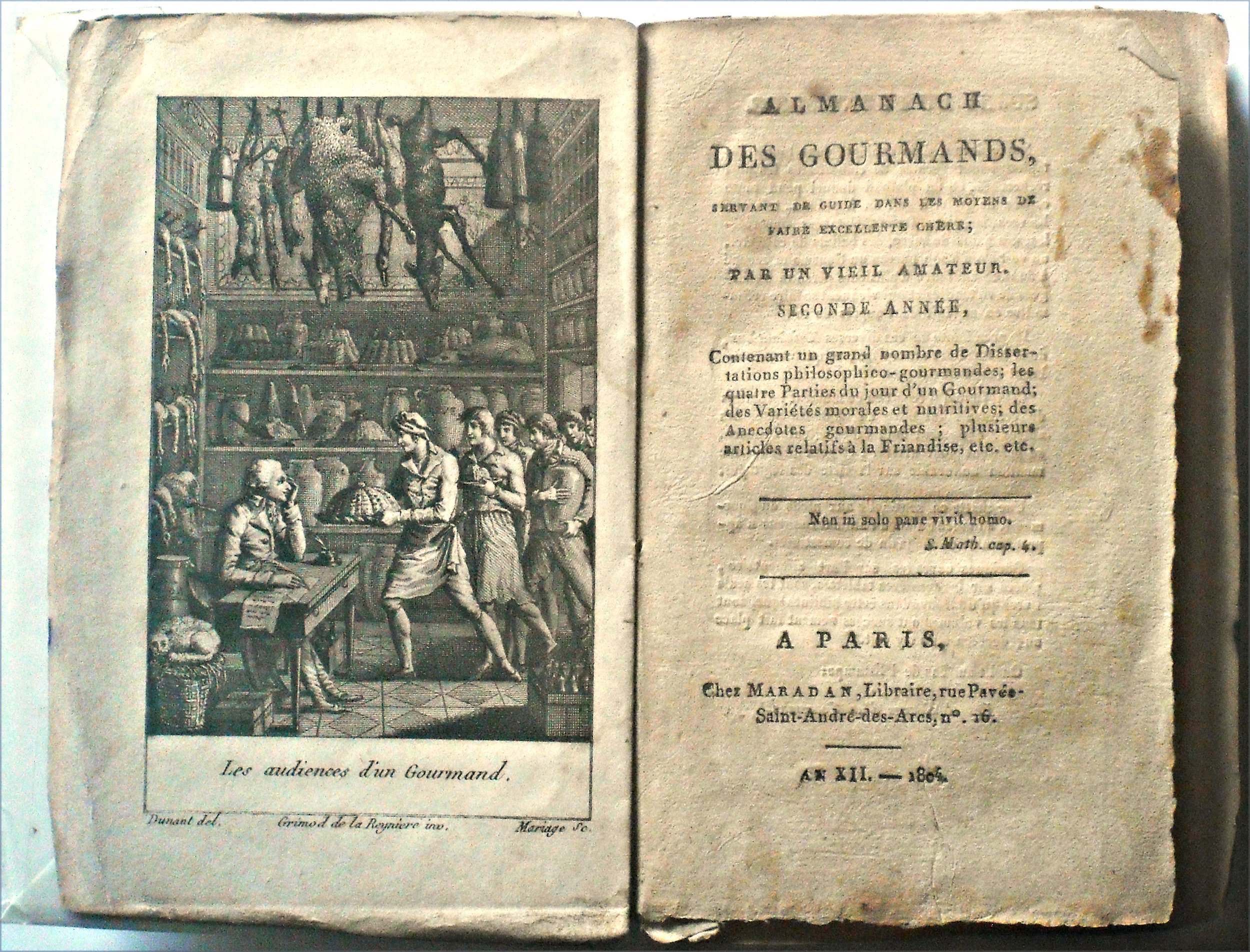
THE FIRST RESTAURANT INFLUENCER
Widely recognized as the world's first influential restaurant critic, Alexandre (Balthazar)-Laurent Grimod de La Reynière (1758-1837) originated the double genre of food critic and restaurant guide by creating eight volumes of the famed "Almanach des Gourmands” (the first public restaurant guides c1803-1812).
"Reynière founded a group of critics that put out a monthly journal that discussed dishes prepared by top Parisian restaurants. Later, he would be accused of accepting bribes in exchange for positive reviews, leading him to cancel his publications and move away from Paris"
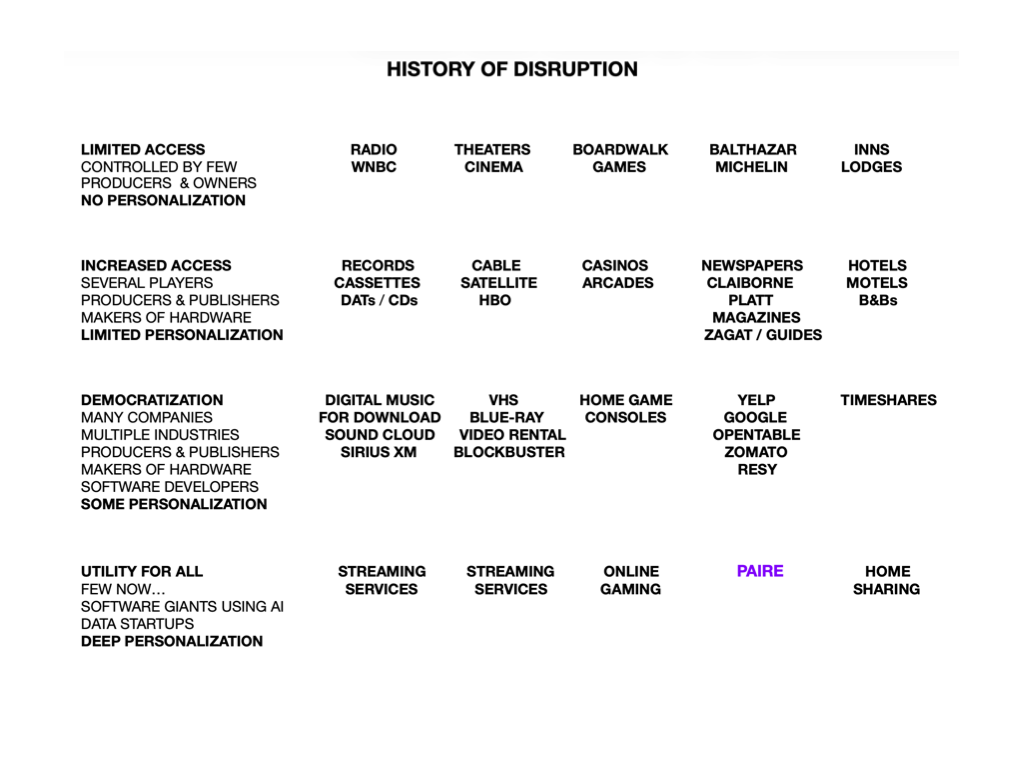
This period of tightly managed clout chasing & trend hopping driven by a select few arbiters of taste has held for centuries. From Balthazar and Michelin to newspaper columnists and arbiters of taste like: Claiborne, Platt, Bruni and the Zagats.
“People often ask why we decided to build a personalized restaurant discovery engine powered by private reviews. The answer is simple. What was true in the 18th century is still true today: Once reviews or endorsements are made public by an influential party, they become a form of advertising and thus susceptible to commercialization. In other words, publicizing data that impacts the profitability of someone else’s business inherently creates an incentive to manipulate that data.”
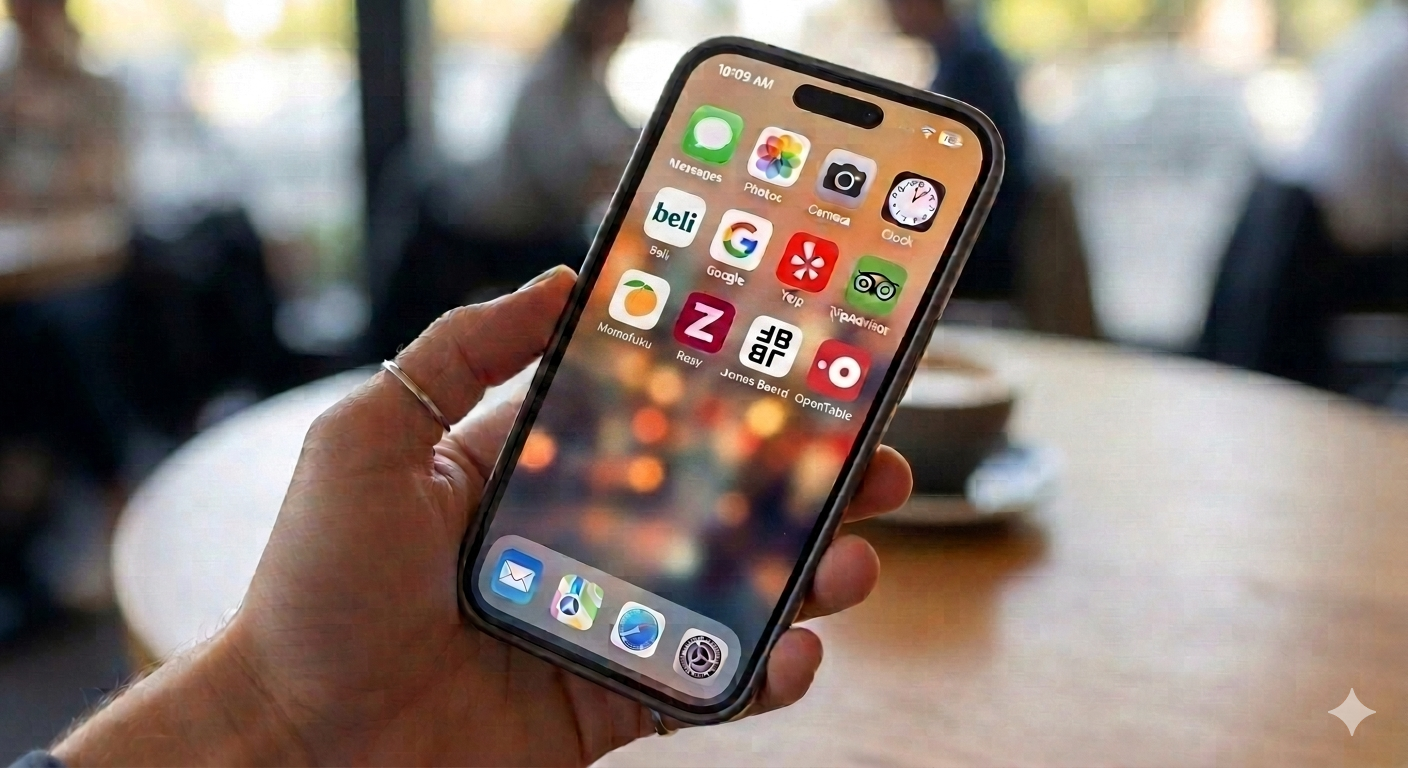
Today’s recommendation engines, like Yelp, Trip Advisor, Resy, Google & Beli have taken the power out of the hands of just one person or a small group of people and crowd-source public opinions, averaging them out and then letting popularity determine a restaurant’s worth. Thus democratizing the issuance of one-size-fits-all “grades” or “scores” to the masses.
The problem, however, is that the minute those “scores” and “opinions” are shared or returned as search results that directly impact the success rate of restaurants, they become the latest form of Balthazar’s old advertising model.
Although modern public rating platforms have policies that prohibit (and “systems to detect”) fake, purchased and solicited reviews; the social networks and search engines they rely upon are now essentially serving as advertising platforms themselves and are increasingly designed to elicit persona-based attention and profitability over authenticity / validity. This is what creates a direct conflict of interest for those interested in unbiased recommendations.
In an age where any operator with $100 can afford to purchase good reviews for themselves or bad reviews for their competitors, existing platforms have become increasingly vulnerable. Legacy platforms rank and assign one-size-fits all grades to restaurants based on their “level of popularity” - a methodology that now seems as archaic as voting in ancient Greece’s Gerousia, (Sparta's Council of Elders) where candidates were assessed and elected by giving the loudest voices the most weight.

While the volume and interests of the mainstream are indeed relevant; our increasing ability to validate data, now makes it possible to satisfy everyone whose preferences fall outside the mean or median as well.
Most food, art and fashion enthusiasts agree that taste is indeed personal. And while averaging public sentiment may prove helpful for many, doing so leaves out a significant number of those whose taste is different than those who may be grading quality and value with bias. Those outliers - with more distinctive taste, who value their time as much as they value their purchases, are precisely the individuals apps like Paire are serving.
THE PRIVATE RATINGS REVOLUTION
Influencers are suddenly coming under more fire than usual and many are seeing 2026 as ‘the dip’ of the “keyboard warrior era”. Need evidence of that? Go on social media. The number of chefs and industry professionals condemning ‘Follow me…’ influencers on Snap, Insta and even Facebook accounts are on the rise. Social recommendation apps like Yelp and TripAdvisor have been gradually losing credibility with the next generation of users who are now looking for more reliable data, highly personalized services and humane applications of voice.
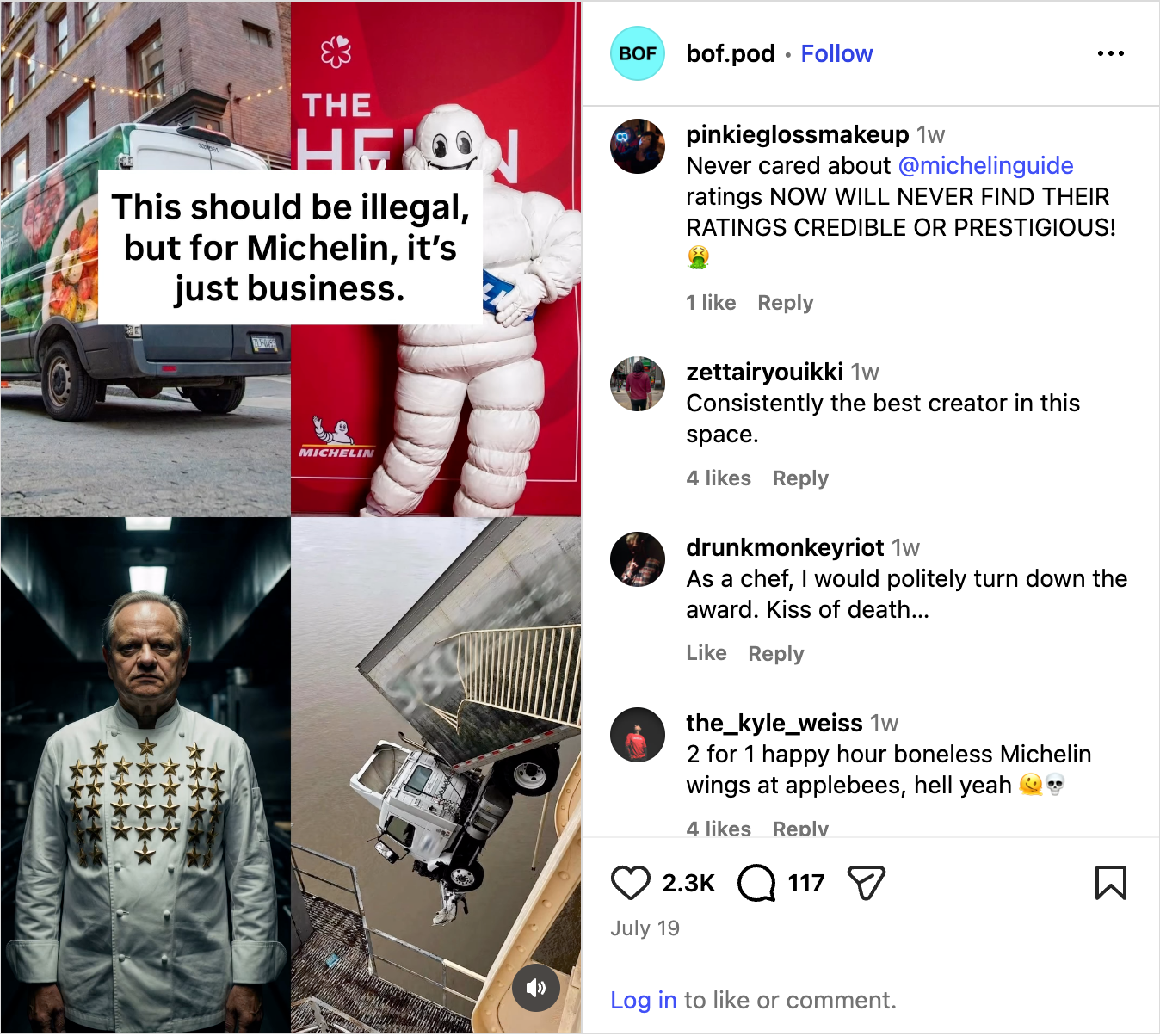
Yelp (with a declining market cap of $2.94B) is experiencing domestic attrition that outpaces the total number of active users globally*. And now the famed and long revered Michelin star system is being called into question - not for the original ulterior motive of recommending restaurants off the beaten path in order to sell more tires but for the recently revealed partnership with one of the country’s largest suppliers of food, paper products and smallwares to the restaurants they review and issue awards.
Josh Sapienza of Paire Appetit, says his company takes more of a guest-centered approach to every aspect of design, including monetization, in order to ensure platform sustainability avoid such conflicts of interest. It’s that approach he credits for ensuring data integrity and an unprecedented level of security for the people they serve. ‘We firmly believe that building trust and maintaining integrity is integral for any company aiming to maximize usability and marketability across a multitude of verticals…stewarding a culture-enriched media capable of sustaining future revenue streams.’ says Sapienza.
- K. Bekhet | Contributing Editor
Paire is a personal restaurant discovery platform that doesn’t promote or endorse any specific restaurants. Instead, it uses machine learning to calculate the compatibility between each member’s personal taste profile and the restaurants available to them. Unlike current options, this technology was developed with foundational security that safeguards data against internal or external manipulation. In short, the only person able to see or change a rating is the person who originally entered that rating.
As an additional layer of security, we designed and built the entire architecture to be free from any incentive for human or automated actors (bots) to alter or artificially generate data. So, even if an account was artificially created or data was amended, the only impact of that corruption would be contained and confined to the compatibilities calculated for that specific account. Simply put - because all ratings are private, the only people impacted by negative or fake reviews are the people (or accounts) generating them.
Our methodology and technology are unique assets that we hope position Paire just ahead of the curve. The zero-party data we protect is far more reliable and thus much more actionable than: category-level filtering, extrapolations derived from curated public reviews, “cookies”, online buying history and ‘offline’ conversations that seem to drive much of the targeted advertising we see in our social feeds right now and generally consider “spam” or “slop” polluting our feed.
GREATER RELEVANCE THROUGH PERSONALIZATION
Deep-personalization doesn’t only hold incredible potential for discovery within the restaurant world…but also seems to promise a tremendous impact for the services industry at large. Unprecedented levels of efficiency and relevancy like this means it might flip the marking world on it’s head. I mean, if our platform catches on, it’s not a giant leap to see how popular it could be for consumers to identify the product and service providers that matter most to them - as opposed to the other way around.
Letting people choose which data they share with which types of companies in order to see/receive the most relevant offers and paying them to do that is not a new concept. Doing so however would represent a tectonic shift in the world of marketing and advertising where real compatibility far outweighs the hype of marketing campaigns that currently seem to be going the way of short-form entertainment.
Consider also the fact that the exponentially increasing number of human (and AI agents) creating products and content means the available supply of products, content and services will soon far exceed the available minutes of screen time & attention of those being marketed to - thus necessitating a smarter filter that can be personalized.
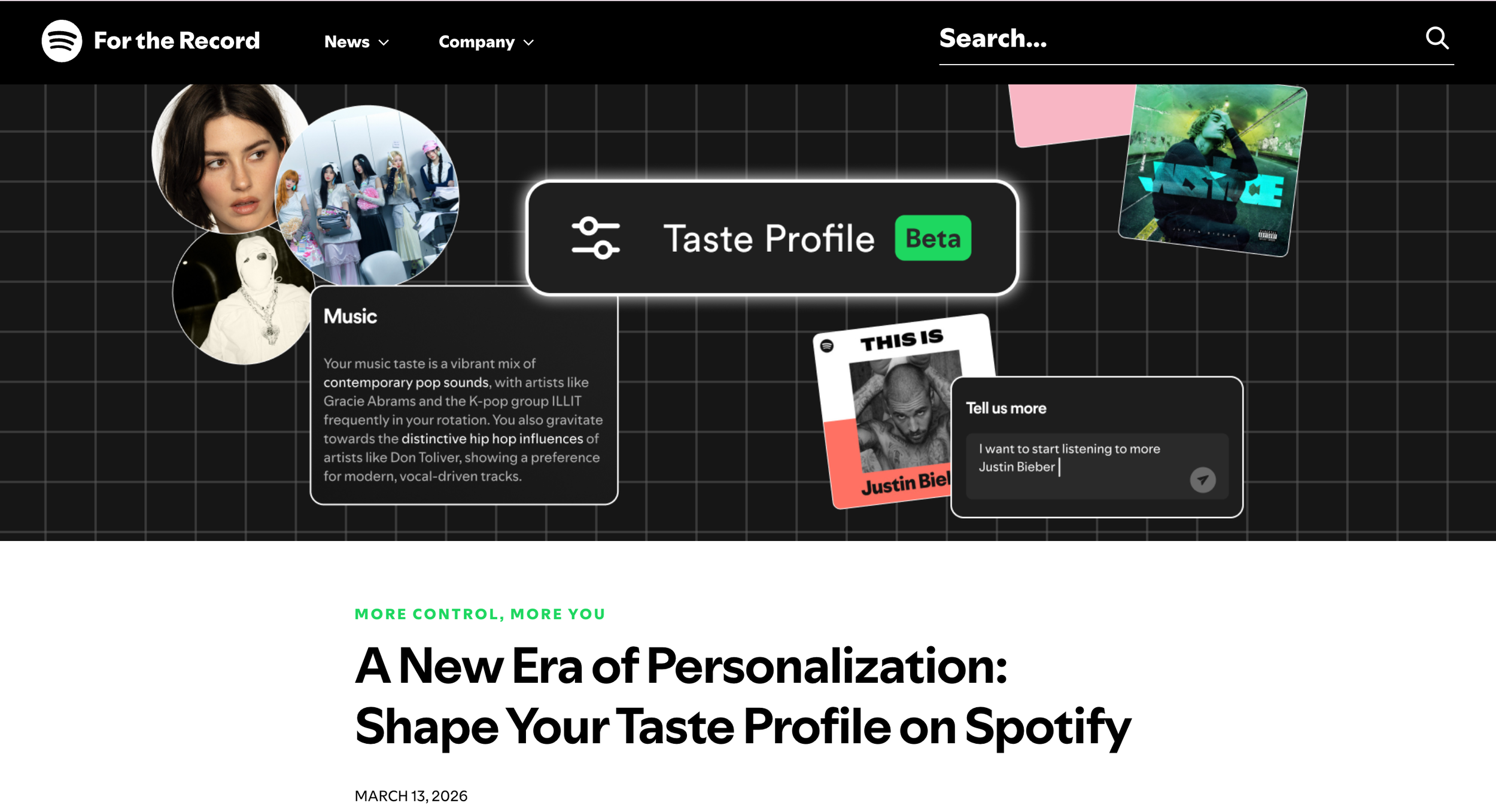
Traditional marketing has an expiration date on the bottom and few are turning it upside down to see what it is. Companies like Netflix, Amazon and Spotify have already jumped in with both feet but are these mega-companies with billions dollar budgets anomalies and outliers or are they trailblazers for the rest of us? Either way, the next phase of marketing is definitely in personalization. Not just for music, movies, retail goods and restaurants but for everything from mobile apps to groceries.
We believe that any company, in any sector, dramatically increasing relevance, control and transparency will inevitably influence modern consumer behavior. In fact, content directed towards audiences who control the flow via predictive analytics has already begun to outperform conversion rates generated by banner ads, paid SEO, and other traditional forms of advertising in a myriad of industries.
“Providing better personalization means ads are more relevant to the people watching them… It’s becoming more and more important to use first party data now more than ever. It’s more valuable now more than ever.”
- Jeff Green | Trade Desk
THE FUTURE OF PRODUCT DISCOVERY
There’s no shortage of industry giants who have been unseated from their position at the top of the food chain, regardless of how long they reigned supreme: e.g., HBO, Atari, Blockbuster, The New York Times, Microsoft, Blackberry, etc… each unseated by a startup using the latest technology and broader market appeal to essentially increase the democratization of access to services.
Take for example, Blackberry - once the undisputed champion of mobile devices. Their Achilles’ heel from the start: the creation of a device that would primarily appeal to business or enterprise-level customers only. Although the product offered some “street-cred” and status envied by many; Americans who didn’t wear a suit to work rarely ever purchased the product.
Apple staked their claim to the market by providing a very similar product with one small yet significant difference - their product was built for and marketed to everyone.
Similarly, Google, which has become an integral part of our daily lives seems equally untouchable. But they continue to diversify and like Yelp, staked claim to the recommendations vertical with the curation of easily corrupted and often fabricated data. Recommendations based on data that does not accurately reflect the taste, opinions and interests of each individual user (see: Google, Yelp, TripAdvisor, OpenTable, etc…) may only yield an accuracy rating of approximately 50% - yet have fed into their main business focus of SEO / paid search where instant results to queries are more valuable than accurate results to queries.
As the domestic population becomes increasingly diverse and knowledge of global cuisine broadens, the number of consumers who’s tastes and preferences are being neglected only rises. Whether Paire capitalizes on the crumbs these giants leave behind or gradually claims a significant portion of market share through the democratization of quality recommendations for everyone; there’s an undeniable upside in our commitment to move forward and redefine restaurant discovery.
“The upside to all of this headwind is that it creates an opportunity for disruption. “If Sapienza and his team deliver a recommendation engine fueled by more reliable and incorruptible data rather than recommendations based on popularity and social trends, we may see quite a few new entries into this vertical chasing their tail.”
Khaled Bekhet | Contributing Editor FreeCol
Whether it’s recommending restaurants, lodging accommodations, universities or healthcare practitioners: a recommendation engine that doesn’t sell ads or business services to the businesses they’re actually recommending - and avoids the echo chamber of ‘liking whatever your friends are liking at the moment’ may just crack the sustainability code and create a tectonic shift in the advertising world.
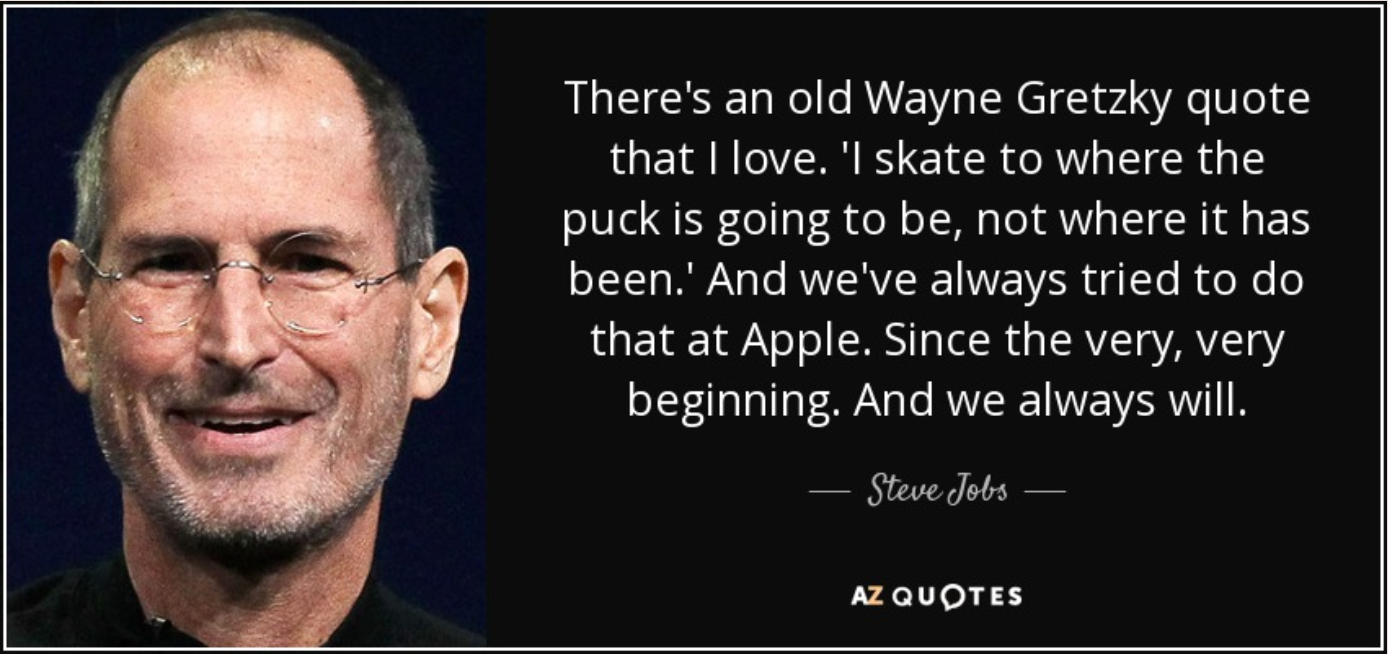
As Wayne Gretzky famously said: “The secret to being a great player is not in skating to where the puck is. It’s in skating to where the puck is going to be.” Paire is definately skating in a different direction. We’ll see if the puck ends up in their path.
In the event you’d like to join Paire’s private ratings revolution, There’s a seat at the table reserved reserved for you.
You can join the wait list here.
*Yelp’s attrition has been attributed to two main factors:
1. Curating reviews of companies while simultaneously selling B2B services to those very same companies is, at best, a conflict of interest…and one that has become more and more obvious to today’s largest group of consumers: Millennials & GenZ.
“According to a Bloomberg report from last year, these young students and professionals command more than $360 billion in disposable income…If a member of Gen Z doesn't agree with the morals of a company, many of them will boycott the products completely and get their friends to do so as well. What advertisers and brand managers learned in their marketing classes years ago is outdated. The best way to learn what Gen Z is looking for from businesses is to ask them.” - Jeff Fromm | Forbes
2. As technology advances, the data curated by these companies (public ratings, “Likes” and online reviews) have, according to experts like those at Harvard Business School, become increasingly less reliable since, online content like this is now bought, sold and artificially generated every day . In fact, the commoditization of ratings has resulted in them determining the system is more hackable than many realize:
“1 in every 5 Yelp reviews estimated to be fake”. And, not all algorithm manipulation is limited to the benevolence of members in a facebook group who agree to give each other “Likes” and positive reviews in order to off-set the negative ones. If you have $100 and a Fiverr account, you can buy five hundred 4 star ratings and positive reviews for your own business - or five hundred 1 star ratings and negative reviews for your competitor.